

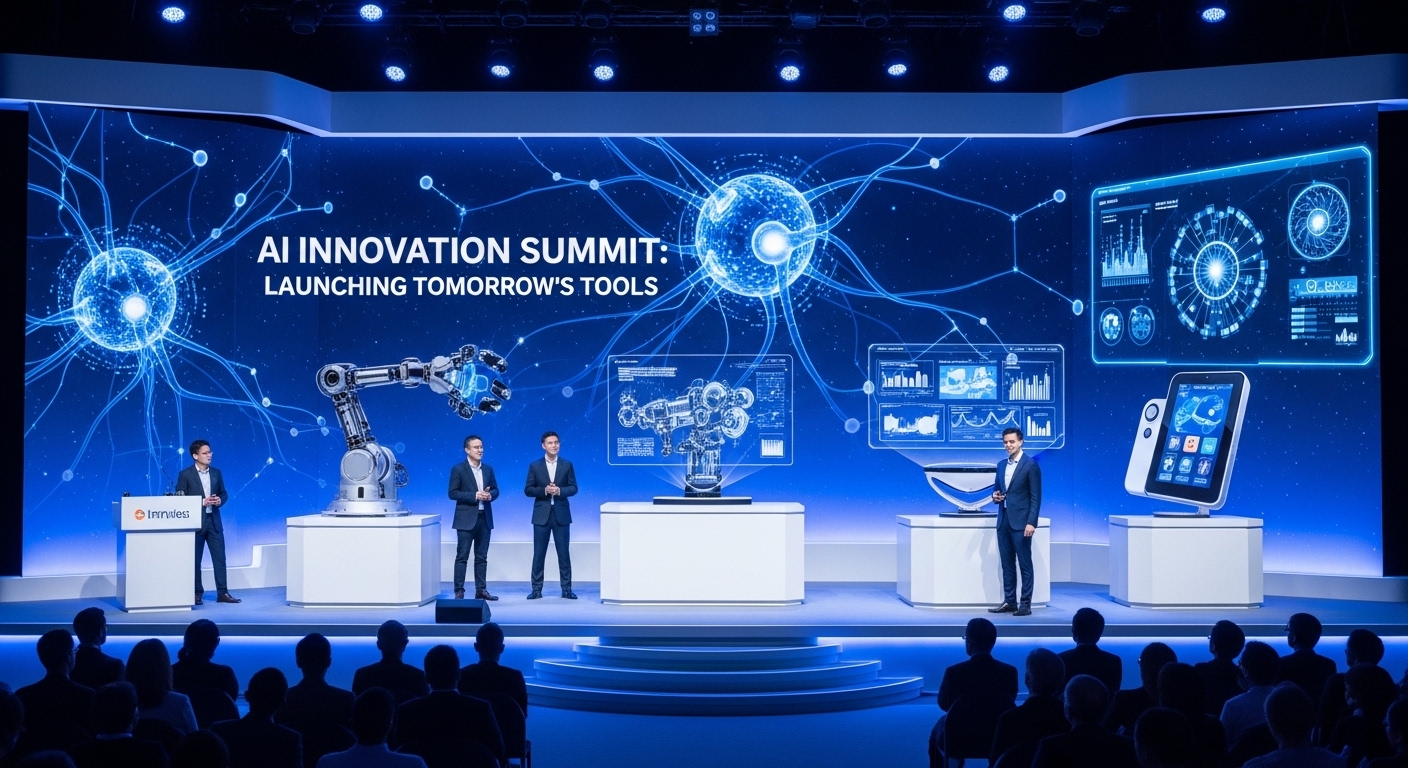
Artificial Intelligence companies around the world have recently introduced a new wave of advanced smart tools designed to transform industries, improve productivity, and automate complex decision-making processes. These innovations are rapidly reshaping how businesses operate, how developers build software, and how users interact with digital systems in everyday life.
Next Generation AI Platforms
OpenAI’s Advanced Model Systems
OpenAI has launched upgraded AI models capable of more accurate reasoning, coding assistance, and multimodal understanding. These systems are being used in education, content creation, and business automation, helping users solve complex tasks with greater speed, context awareness, and improved natural language interaction.
Google AI Ecosystem Expansion
Google has expanded its AI ecosystem through advanced search integration, productivity tools, and generative AI features. These tools enhance document creation, data analysis, and communication systems, allowing businesses and individuals to access intelligent suggestions and real-time automated assistance across multiple platforms.
Microsoft Copilot Innovations
Microsoft continues to integrate AI into its software suite through Copilot technologies. These smart tools assist in writing documents, generating code, analyzing spreadsheets, and managing workflows, significantly improving productivity for enterprise users and everyday professionals across global digital environments.
NVIDIA AI Computing Tools
NVIDIA is powering the AI revolution with high-performance computing systems and AI development platforms. Their advanced GPUs and AI frameworks support deep learning models, enabling faster training, improved simulation capabilities, and enhanced performance for industries like gaming, robotics, and autonomous systems.
Anthropic Safety-Focused AI Systems
Anthropic has introduced smart AI tools focused on safety, reliability, and alignment with human intentions. Their models are designed to reduce harmful outputs while maintaining strong reasoning capabilities, making them suitable for enterprise applications requiring responsible and controlled AI behavior.
Business Automation Transformation
Smart Workflow Optimization Tools
AI companies are developing tools that streamline business workflows by automating repetitive tasks such as scheduling, reporting, and customer communication. These systems reduce manual workload, increase efficiency, and allow employees to focus on strategic decision-making processes that drive organizational growth and innovation across industries.
AI-Powered Customer Support Systems
Modern AI tools now handle customer queries through chatbots and virtual assistants capable of understanding natural language. These systems provide instant responses, resolve common issues, and escalate complex cases to human agents, improving customer satisfaction while reducing operational costs for businesses globally.
Data Analysis and Decision Intelligence
Advanced AI platforms are increasingly used to analyze large datasets and generate actionable insights for businesses. These tools help organizations identify market trends, predict customer behavior, and optimize operational strategies, enabling faster and more informed decision-making processes across competitive industries.
Automated Content Generation Systems
AI-powered content tools are now widely used for creating articles, marketing materials, and social media posts. These systems assist creators by generating drafts, improving writing quality, and optimizing content for engagement, significantly reducing production time while maintaining consistency and creativity.
Enterprise Resource Planning Enhancement
AI integration into enterprise resource planning systems is improving supply chain management, financial forecasting, and inventory control. Businesses are using these smart tools to enhance accuracy, reduce costs, and improve coordination between departments, resulting in more efficient organizational performance.
Technology Industry Impact
Accelerated Software Development
AI tools are revolutionizing software development by assisting programmers with code generation, debugging, and optimization. Developers can now complete complex projects faster, reduce errors, and focus more on innovation rather than repetitive coding tasks.
Cloud Computing Integration
Cloud platforms are integrating AI services that allow businesses to deploy intelligent applications without heavy infrastructure investments. These services provide scalable computing power, enabling organizations to adopt AI solutions quickly and efficiently.
Cybersecurity Enhancement Systems
AI-driven cybersecurity tools are helping detect threats in real time by analyzing unusual network activity. These systems improve protection against cyberattacks, data breaches, and malicious software by responding faster than traditional security methods.
Robotics and Automation Growth
AI companies are combining smart software with robotics to automate manufacturing, logistics, and service operations. These systems improve accuracy, reduce labor costs, and increase productivity in industrial environments.
Semiconductor Industry Advancement
The demand for AI tools has driven innovation in semiconductor technology, with companies developing faster and more efficient chips. These advancements support the growing computational needs of modern AI applications.
Future of Artificial Intelligence Tools
Human-AI Collaboration Systems
Future AI tools are expected to work more closely with humans, assisting in decision-making, creativity, and problem-solving. These systems will act as intelligent partners rather than simple automation tools.
Personalized AI Assistants
AI companies are developing highly personalized assistants that adapt to individual user behavior, preferences, and needs, offering tailored recommendations and support across daily tasks.
Autonomous Business Operations
Future AI systems may enable fully autonomous business operations, where processes like logistics, marketing, and customer service are managed with minimal human intervention.
Ethical AI Development Focus
Companies are increasingly focusing on building ethical AI systems that prioritize fairness, transparency, and accountability in decision-making processes.
Global AI Accessibility Expansion
AI tools are expected to become more accessible worldwide, allowing small businesses and developing regions to benefit from advanced technologies.
Conclusion
Artificial intelligence companies are rapidly transforming industries through advanced smart tools that improve productivity, innovation, and global connectivity. As technology continues evolving, AI will play a central role in shaping future business operations, digital experiences, and economic development across the world, making intelligent systems an essential part of modern society moving forward.